
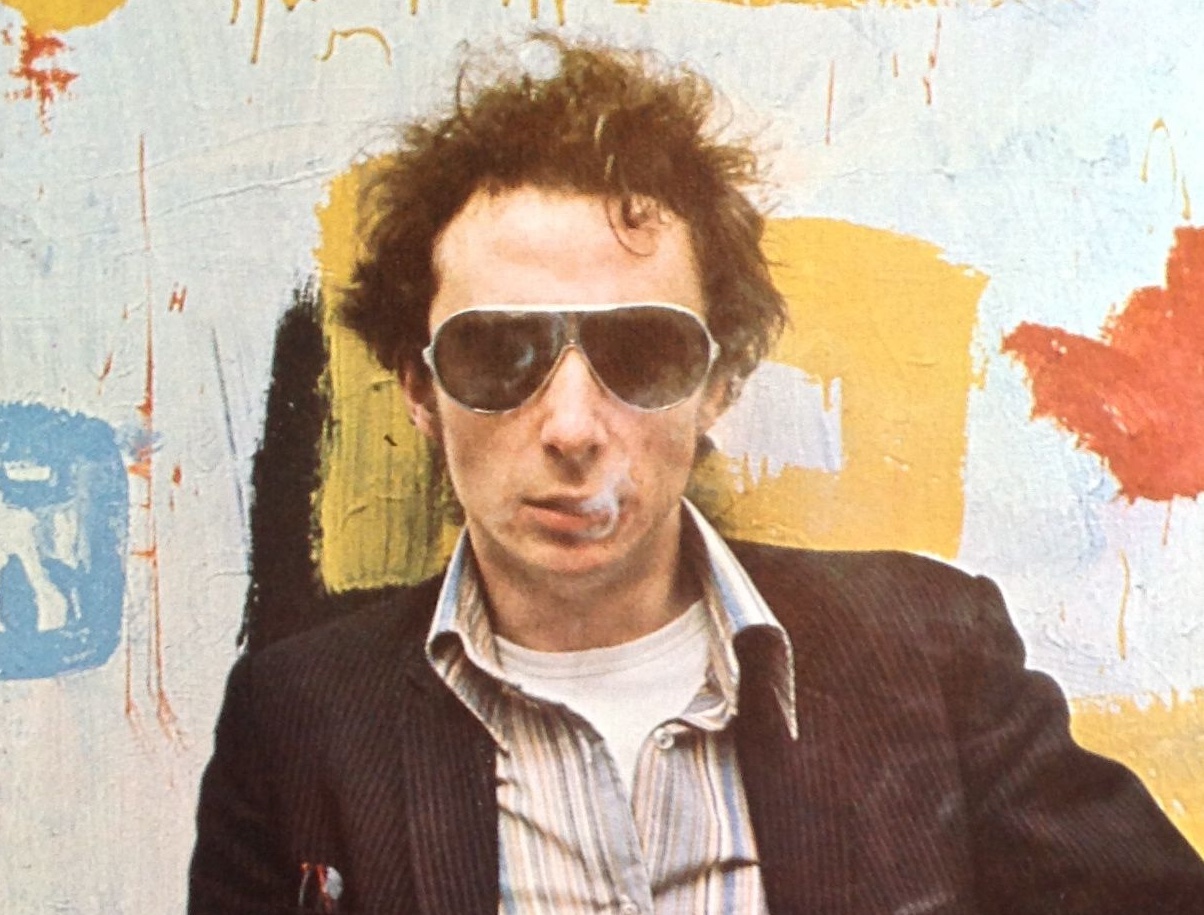
Philadelphia-based music publicist, journalist, and author Jay Nachman has recently released the book Graham Parker’s Howlin’ Wind via Tangible Press, which takes on the story behind British artist Graham Parker’s debut album, arriving in 1976 to rave reviews on both sides of the Atlantic. But in delving into the album, Nachman also constructs a very thorough early biography of Parker, gathered via interviews with the artist. Nachman also brings in the other musicians from The Rumour who worked on the album, and with their added input, Nachman creates a very colorful collage of influences and ideas that surrounded the creation of each of the tracks on Howlin’ Wind.
Graham Parker, who has also worked for a number of years as Graham Parker and The Rumour, is not only part of a fascinating generation of often self-taught musicians inspired by the sudden arrival of The Beatles, but is a lifelong songwriter and musician, now working creatively for over 50 years. That context makes the study of his early work even more rewarding, since fans can draw links between Parker’s initial phase of songwriting and the things that concern him these days.
If you’re a Graham Parker fan, and are aware of the novels that Parker has personally written, you well might ask, as I did, why he did not choose to write a memoir of this early part of his life himself.
To this, Parker kindly replied:
I have not considered a memoir, although my literary agent who represented me for my novel and short story books is giving me a bit of a kicking about it.
But I figure I’ve already done that in the fiction works, which are a much more amusing and interesting version of the truth.
It would be hard to argue with that statement, but we’ll also credit Nachman’s careful research in presenting us another very interesting version of the truth when it comes to Howlin’ Wind. I spoke with Jay Nachman about some of the book’s highlights and the experiences that he had working on it.

Hannah Means-Shannon: This is a very wide-ranging book and I can tell it was a big undertaking. Also, I want to mention how interesting the structure of the book is, where even when you’re talking about Graham’s early life, you pull in lyrics he wrote decades later that refer to those events. It really weaves the music and the life together.
Jay Nachman: Having been a longtime fan, and familiar with all of his work, I know that he’s a singer/songwriter who writes about his life. Not exclusively, since sometimes he does commentary-type songs. But I thought that for some of the songs that he wrote, later in his career, by putting them into the bio section, I’d be able to show the breadth and depth of his songwriting.
HMS: I’m not an expert at all on Graham Parker’s work, though I’m a fan of British music of the 1960s and 1970s particularly, but I saw more than I expected of the autobiographical in his lyrics in your examples. It happens that way with Springsteen, too, that you know that he’s being autobiographical, but when you really tease things out a bit, then you get a really personal picture.
JN: That’s fair, though with both Graham Parker and Springsteen, they will also write songs that spring from their imagination. There’s that, too. But I think that’s true for any artist, whether you’re a painter, or a novelist, or what have you. They always bring themselves into it, even if it’s not exactly about them. Artists show the way that they think. Why did a songwriter choose to make something acoustic rather than electric? I think artists show you the way that they think and view the world.
HMS: Can you tell me a little about how you decided to work on this book, and what Graham’s reaction was? As you say in the book, he’s a very down to earth person, and I’m sure that played a part.
JN: Over the years, I’ve gotten to know Graham and some of the members of his band. I’ve developed distant relationships with them. I had a blog where I interviewed some bands members, as well. That’s one part of it. The second part of it is that I thought that it would be a good story around the making of the album. I knew that his band members had different inspirations, and I didn’t know that much about his inspirations. Though you can guess some of them, like Van Morrison, Soul music, or The Stones. I was curious about how that all came together to create that album, with music that I thought was terrific, and was highly acclaimed when it was released.
So I approached him, and without much hesitation, he said, “Yes.” I can’t speak for him, but I think he was proud of that album, as his first album, and he was happy and eager to tell the story about that part of his life.
HMS: It seems to me like such a good idea to tell this story, because once you read it, you realize, “This album could easily have never happened.” As a young person, he had a very wandering life, and full of ups and downs about whether he’d be a professional musician or not. Did you already realize the unlikeliness of the album happening before you researched it?
JN: Well, I think it was a little bit of everything. I thought it was a great album, and I thought there was a great story to it. But I didn’t really know that much about Graham’s early life prior to those interviews I did with him. Through reading other interviews over the years, I knew that he was working at a gas station when he was signed to a record contract.
But, interestingly, Graham never played, or played very rarely with other musicians, until he signed his record deal. He was never in garage bands or other bands, and played with other musicians only in a few instances. He was really quite the novice when he got into the studio, a novice, but with a great belief in his songs and his ability. He says in the book, “I didn’t know how to sing, because I hadn’t spent three years playing in pubs with other musicians.” He talks about some of his “learning on the job” experiences.
HMS: When I think about Graham in the context of musicians I’ve interviewed and read about over the years, he seems to fit into this category of the person that almost comes up out of nowhere, on their own. I know that he was inspired by the Beatles, like his whole generation, but I feel like he’s so self-taught, he’s so self-motivated, and his writing and thinking are so individualistic. He’s kind of a wild card.
JN: He’s definitely individualistic, in that he doesn’t write with other people. He writes as a solo artist, because that’s what he is. He gathered all these influences from The Beatles, and The Stones, from Soul music, a little bit of Reggae, Blues some Psychedelia that stayed with him. He gathered all those resources and created this album by dint of his talent, but also a lot of hard work. He was writing every day, and he also edited and scrapped things. He was very good at knowing which songs were up to snuff.
HMS: When he was selecting these songs out of a wider body of work, and then going into the studio for the first time, was there a time that you think he could have felt overwhelmed by such a transition? Or was he someone who found it easy to roll with it?
JN: I think he says that, “These were the songs.” Meaning the 12 songs on the album were good songs, and they didn’t have to look at his other material. I think Nick Lowe, who Produced the album, says something along the same lines. When he got to the studio, it felt right to him, but he also had some doubts and insecurities, as anyone would, because he was with these seasoned musicians, like Brinsley Schwarz, Martin Belmont, and Bob Andrews. And now it was time to put up. With the guidance of his bandmates and Nick Lowe, it all worked out.

HMS: It feels really positive that at that point in his life, and somewhat for the first time, he wasn’t alone. He was in the presence of like-minded people and kind of accepted by a group of other musicians.
JN: Yes, and even beyond the musicians, his manager, Dave Robinson, who had a lot of music experience, believed in him and then helped him. He had someone to help guide him through the treacherous shoals of the music industry. He was signed almost immediately on the strength of his song, “Between You and Me.” He knew that he was “good” because record companies were eager to sign him, so it was this step-by-step process that his confidence was built up through positive feedback.
HMS: When we look at the long career he’s had, and his commitment to music, it’s amazing that those life-changing things happened for him at just the right time.
JN: You’re absolutely right. I think it’s to his credit that he’s been able to make albums for 50 years now. Firstly, he has an audience. A lot of musicians who came up with him are called “heritage rockers” and are no longer producing albums on a consistent basis, whether because of the marketplace or their own inability to do it.
I think part of it for Graham Parker is that he has that need, and compulsion, to express himself. It would be easy for him to sit at home, and watch sports, or hang out at the pub, or whatever. That would be a pretty good life. But there’s something that drives him to continue to make and to record music, and I guess that’s the need to express himself.

HMS: I have a real respect for people who spend so long in music, and it also enables us to see through through-lines and themes in their work over time. In Graham’s case, he also seems like the opposite of ego.
JN: Music is his life.
HMS: You must have learned things that surprised you, through doing these interviews and this book. Even though you’ve followed his work since you were a young person, there’s got to be things that came up that surprised you, particularly since you went through this album song-by-song with him and the other band members.
JN: Here’s something which is in the book: Graham had played music on and off as a kid, but not very seriously, but what really motivated him was when he dropped acid. He all the sudden got inspired. He then had these visions. And it then became a compulsion, that artistic compulsion, saying, “I’ve got to express myself.” I think that happened in Guernsey.
Maybe it would have happened anyway, and something else would have triggered that compulsion, but I thought that was very interesting because of the bigger question: What compels an artist to make their art? What makes them push themselves?
Then, there’s something surprising, which is that has mildly influenced by Psychedelic music. It doesn’t really appear in his music too much, but he says it’s there in there somewhere. Those were the big surprises for me.
HMS: I was surprised when I read that part of the book, too, since you wouldn’t have known that about him from his work. But on the other hand, it’s not that surprising because of his generation. Did that result in a kind of spirituality for him? Or was it more that creativity became his spirituality?
JN: It definitely wasn’t a religious experience. I don’t know if you would equate “religious” and “spiritual.” But Graham has made it very clear in some of his songs, beginning with “Don’t Ask Me Questions”, like saying, “Hey, Lord, don’t ask me questions…”, that he is not a religious person, and doesn’t really believe in a God.
I don’t think that the experience impacted a sense of spirituality for him, but I think it created that urge, that desire, that compulsion to make music and speak, to really express himself. As he says, he wasn’t a very talkative, expressive person at that time. He was a typical hippie saying, “Yeah man, cool.” This was a way to express himself. Acid was just part of the times, and he continued to drop acid for a few years afterwards, and he credits it with being a great experience in opening up his mind, expanding his mind.
HMS: I got the sense it was that he discovered how much was going on inside of him, and then wanted that to be used for created work. There is a little bit of a visionary quality to some of his works. The song “Howlin’ Wind” feels like a strange dream, almost, like a kind of wasteland. You have these characters, and it’s almost like a prophecy.
JN: It’s got that great groove, so you’re already tapping your foot, but then you’re left wondering, “What exactly is he singing about here?” You’re right, it’s mysterious, it’s spooky, and you know there’s something that’s going on there that’s speaking to larger concerns.
HMS: Just in contrast, to show how wide the breadth of the album is musically, “Soul Shoes” is a totally different sound to “Howlin’ Wind.” It’s very Rock ‘n Roll, almost Rockabilly.
JN: It’s his version of the Stones, and that’s what he was able to do, as he’s said: He was able to take different sounds, like The Rolling Stones, or Rockabilly, or Soul, or Reggae, and make it into a Graham Parker song. You could hear the inspirations, but it sounds like Graham Parker.
HMS: In closing, I asked Graham Parker again if he had any reservations in sharing the “stories behind the songs” for this new work and giving away a secret or two in the process.
To which Graham Parker replied:
Well, it would have been a very short book without my input and without the Rumour members also being involved explaining their side of things. Also, going back as far childhood and youth to describe just how much living it took to create that first album has a bit of a memoir feel about it. Thanks, Jay, you wrote it for me!

Jay Nachman has an author event about Graham Parker’s Howlin’ Wind at Randy Now’s Man Cave in New Jersey this Sunday, December 21st, 2025 which you can find out more about here.
