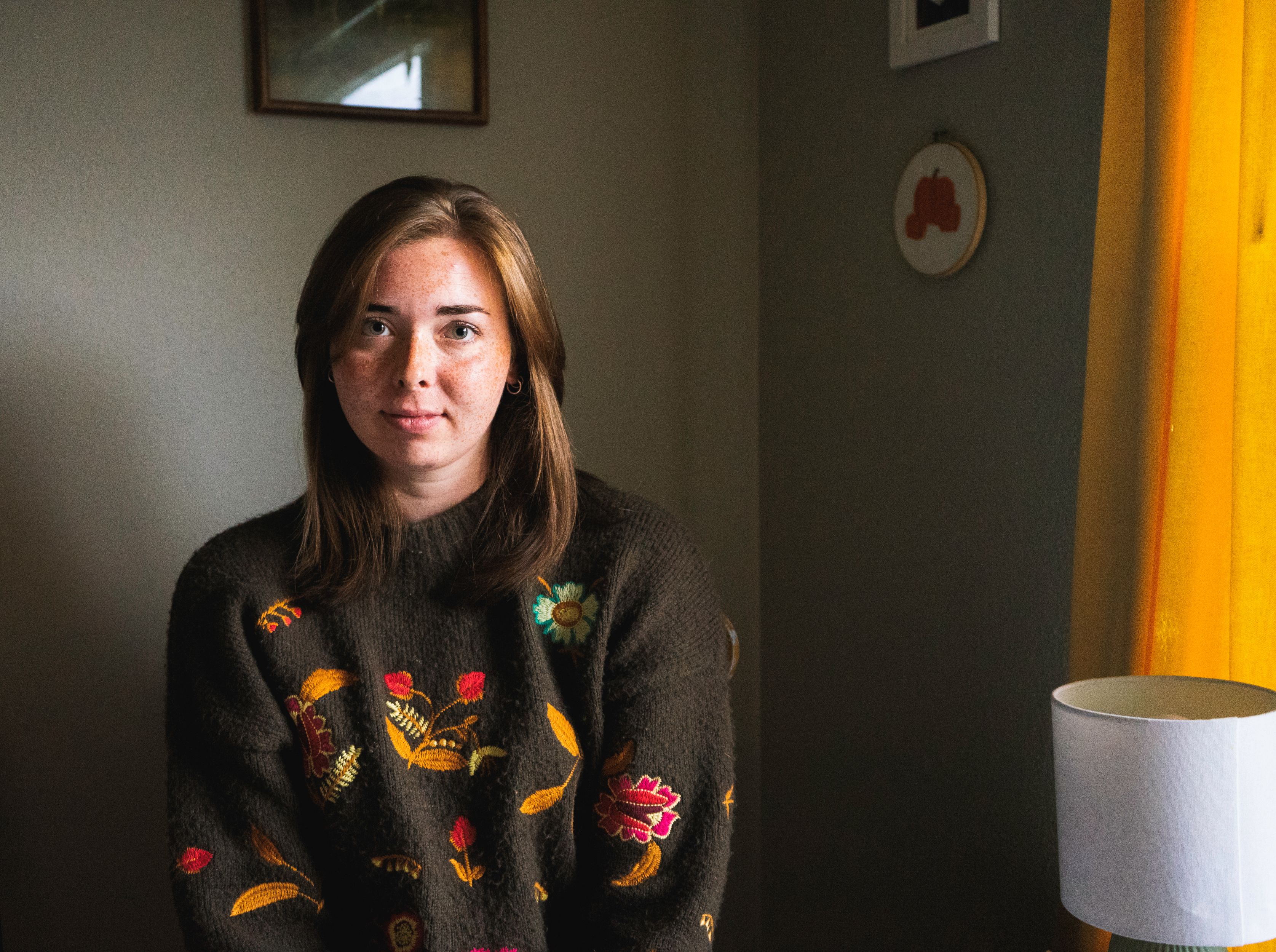
[Cover photo credit to Trey Schueler]
Singer-songwriter Charissa Hoffman, a sixth-generation musician from Nashville, was the first ukulele principal to be accepted at Berklee School of Music. She began playing the instrument at age eleven. Rather than strumming chords on the four strings, as heard on pop hits over the years including Tiny Tim’s “Tip-Toe Thru’ the Tulips with Me,” Israel Kamakawiwo’ole’s “Somewhere Over the Rainbow/What a Wonderful World” medley or Train’s “Hey, Soul Sister,” Hoffman plays individual notes as a lead instrument, sounding like a beautiful harp.
Hoffman showcases her ukulele and songwriting creativity on her debut album Horizon, produced by John Mailander, with special guests including banjoist Béla Fleck. Wildfire spoke with Hoffman about five songs from her new album.

Available on CD and digital formats
Warren Kurtz: Congratulations on your new album. The way you play ukulele is more beautiful than I have ever heard. Do you use alternate tunings?
Charissa Hoffman: Thank you. On a few of the songs on the album I use alternate tunings, but most of them are played with the standard tuning of G-C-E-A. I like alternating between the two high strings, G and A, and that makes it feel topsy-turvy.
WK: I am used to hearing ukulele chords instead of what sounds like a harp to me, which I heard immediately on the opening song “Forward Motion.” As the song evolves, a full sound is delivered powerfully, with Harry Bartlett’s electric guitar, and you and the background vocalists, Harry, along with Larry Cook and John Mailander, singing about all that you believe in the bridge. I understand that the song deals with stepping away from organized religion, that is handed down to you or forced upon you, which I also know personally.
CH: I grew up in the Southern Baptist Convention and there had been this huge undercover study, finding over 600 cases of sexual abuse that had been covered up by that specific denomination. We were friends with the person who ordered the study and I said, “Good for him!” On the other hand, the institution that I was raised in had values that I don’t believe, on how women can be and it was really bad. Growing up, I loved going to church and singing together, so with “Forward Motion,” I wanted to list the things that I believe as my new motto, quoting the lyrics, “You can trust yourself, love yourself, true love will always win, and true change starts within.”
WK: “Who Am I” is wonderfully melodic and I love the line, “I was someone once.”
CH: I graduated during the pandemic, and I joke with my boyfriend Trey that I had all these career opportunities lined up which dissipated, and it has been hard to climb back on top. Shouting, “I could have been a contender” would be too angry. I wrote the song when I was a live-in nanny, thinking about what it was like for women becoming mothers and what it feels like to have your identity go into this new person you made. Looking back at all the things you had done before this person came along seems overshadowed and you wonder if you will ever get back to it. I know that I was a surprise. My mom’s career took a left turn with me. There is so much joy in motherhood but for many women there is this intangible loss that can be difficult to talk about.
WK: You are joined by Béla Fleck on banjo for “Love is an Ocean.” The string sounds of your ukulele and his circular banjo remind me of the early days of Seals & Crofts that I grew up on with their acoustic guitar and mandolin notes. Having Béla adds power to the song.
CH: I had come up with a ukulele part. When Béla, a music hero of mine, came to the studio, we stacked string harmonies along with Harry’s guitar. Everyone played the same rhythm with slightly different notes, complementing each other.
WK: In addition to listening to Seals & Crofts in the ‘70s, I also listened to a lot of Canadian radio, where native Canadian artists were featured, including Joni Mitchell, although songs from her 1976 album Hejira, that I know you enjoy, didn’t produce any radio hits. You have said the album inspired your song “Natchez Trace Bridge” with its teenage reminiscing lyrics and a wonderfully haunting pedal steel guitar from Chris Lippincott.
CH: I graduated high school at the age of seventeen, speeding through it and college that followed. Then I had a lot of space on my calendar, and I wanted the song to reflect that. I love Joni Mitchell’s Hejira album. I would go on a ritual where every Saturday morning I visit this landmark near Nashville, which is the Natchez Trace Parkway Bridge, and drive under it, admiring its architecture. It has a power to it and unfortunately a location which once was known as the place for the highest number of suicides, but thankfully they have taken measures to reduce that. I had a specific set of roads that I timed out to be the length of the Hejira album and felt catharsis, driving under the bridge, taking in the stark beauty of the landscape offset by its manmade structure.
WK: The long-distance love finale “Parallel Lines” is filled with fascinating storytelling and has great harmony vocals from Abigail Washburn on the chorus.
CH: My mom raised me on the music of Beth Nielsen Chapman and Kathy Mattea. We love story songs. When I met Trey at a birthday party, we discussed our individual pasts and learned how similar they were, even working at the same bookstore chain in two different cities. There were all these ways that our stories mirrored each other and finally came together. It made it seem that we knew each other longer than we had because we had so many shared, parallel experiences. I look forward to sharing all these songs on stage. We have an album release show planned for November 9 in Nashville, followed by a tour, going through the 21st, the Saturday before Thanksgiving, with all the information on my website. Thank you for taking the time to listen to my music. It was great meeting you and chatting with you.
Warren Kurtz, a long-time music journalist and author, can be contacted at fabulousflipsides@yahoo.com