
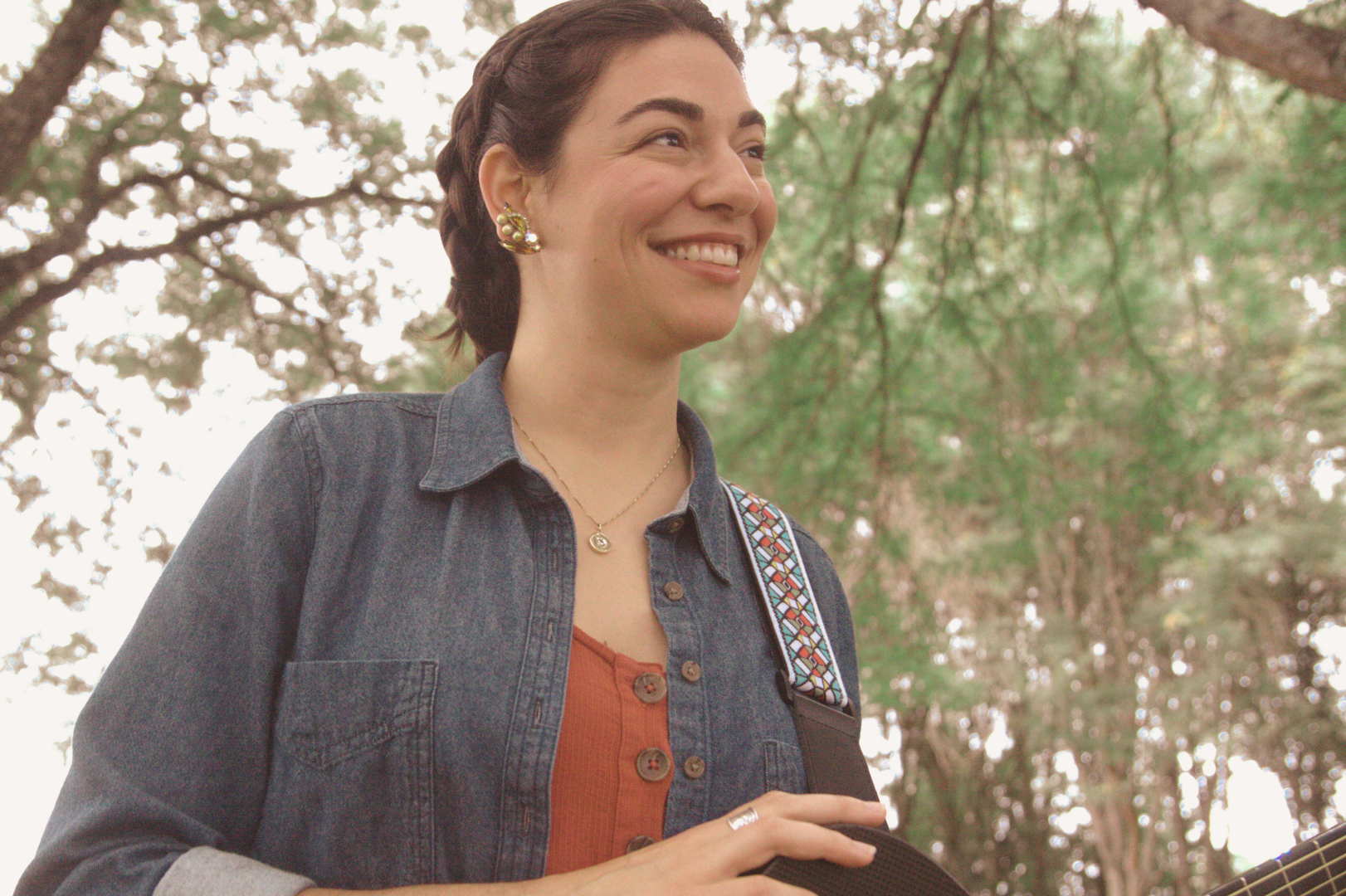
[Cover photo credit to Tom Netherland]
Singer/songwriter Teni Rane will be releasing new album, Never Turning Back in September of 2026, and acts as a “reflective journey through the many kinds of places people inhabit over a lifetime.” That applies to both outer and inner life, and in particular, to “moments of transformation.” She further draws the links between “place as memory” and “who someone used to be.” The songs “Arkansas” and “Places” from the album are out now.
We’re very pleased to premier the new track “Driveway Conversations” here on Wildfire Music + News today. The track will arrive this Friday, April 17th, 2026.
It feels like “Driveway Conversations” may be quite an important song, thematically, to Teni Rane’s upcoming album because it so carefully assesses the magical moments in our lives that make us feel full of possibilities, and the distance traveled over time to an internal place where those magical moments seem gone, maybe forever. If that sounds like a glum topic for a song, that’s not an accurate reflection of “Driveway Conversations” which is, instead, and emotional journey through beauty to a place of questioning, but that journey is never handled abruptly.
Rane builds the details of an experience that is likely to help the audience tap into their own special moments, moments where they felt most alive and most themselves. Then, she allows the song to show how vital those moments might be to our ongoing lives when we consider their absence. When special experiences are happening to us, we hardly have the words for them, but “Driveway Conversations” shows how looking back at a moment in a car, talking with someone special in the rain, can finally be described, with all its emotional charge, years later. The contrast that helps illuminate the value of those moments is looking at a current life, one without those conversations, “now stuck in boxes”. When there are hard truths in the song, Rane builds in space for reflective instrumentation, as if leaving room for the speaker, and the audience, to process and consider fears that arise. The use of layered vocals, at times, punctuates the song’s rising energy and helps assert the importance of these emotions, showing that our internal lives are just as valid as our external circumstances.
Perhaps the most impressive thing about “Driveway Conversations” is taking a look at where it starts, and then where it ends up. The first two thirds of the song pose important questions, but Rane goes the extra mile by dropping in a discussion of identity before the end, asking maybe the hardest question, what if we have actually become someone we’re “not supposed to be”? The landing is really important to the emotional truth of this song, and Rane doesn’t give a sugar-coated answer to this final consideration. The song is a confession, an admission of frightening thoughts, and they are allowed to breathe and hang in the air. Perhaps the song will inspire audiences to be brave and allow their own silences during hard conversations, with themselves, and with others we care about.
Teni Raine says about the new song:
I wrote “Driveway Conversations” as a love song to those quiet, safe moments when time slowed down and it felt safe to share dreams, fears, hopes. It’s about grieving how busy life can steal that kind of softness, how we trade halos of streetlights for schedules and noise. The song is my hope that even if those moments feel behind us, we can still find our way back to honest conversation, real conversations despite the storm of life.

“Driveway Conversations” is an excellent example of how, on the new album, Rane looks at “how our inner and outer worlds are reconciled.”
The title, Never Turning Back, suggests that in life, “the journey must move forward.” The album is geared towards “inviting listeners to reflect on where they’ve been, where they are, and the unseen places still ahead.”

Musicians who appear on Never Turning Back include Teni Rane on lead vocals, acoustic guitar, background vocals, and kalimba, Phil Faconti on acoustic, electric, classical, and baritone guitars, and Dave Eggar on cello, piano, and keys. It also includes Brent Bill on bass and percussion, Parker Hall on taps, Jonathan Shumaker on bass, and Jivan Gasparyan, Jr. on duduk.
