
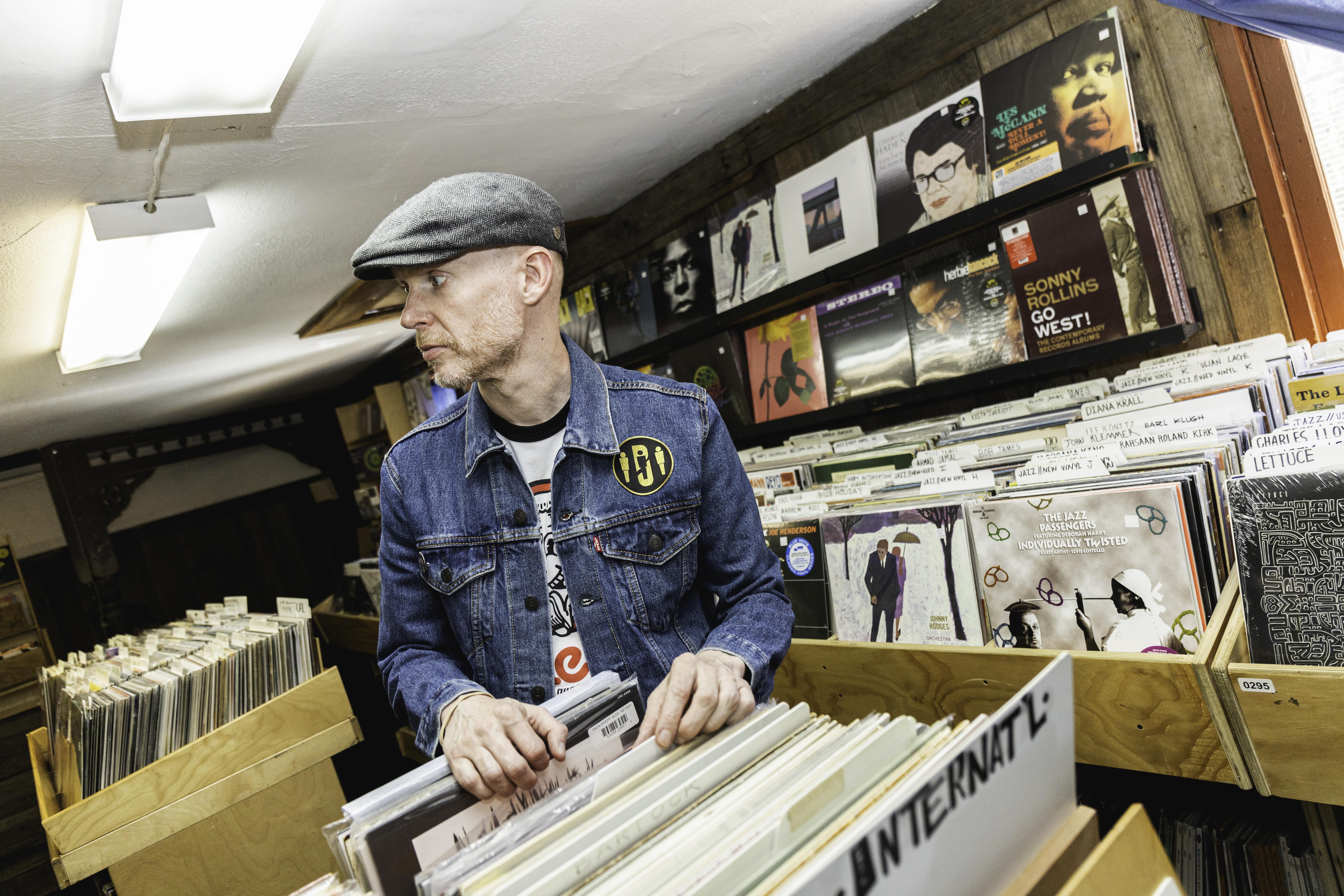
[Cover photo credit to Matthew Leonetti]
Portland, Oregon-based Singer/songwriter Kasey Anderson released his new album, To The Places We Lived, digitally this autumn, but today, February 14th, 2025, the album arrives on vinyl and CD. It’s also joining digital platforms in a Dolby Atmos-mixed version. Anderson worked on the album for several years, intentionally involving many musical collaborators from across his career. Having pursued traditional industry releases for many years, he decided that this album would mark the conclusion of commercial releases from him.
Anderson also crafted To the Places We Lived as “a sort of spiritual sequel” to his 2010 album Nowhere Nights, which has a particularly important place in fans’ hearts.
He explains:
I wrote To the Places We Lived to be my last record. I thought a lot about Nowhere Nights while we were making To the Places We Lived because this record picks up where Nowhere Nights left off; a sort of spiritual sequel, I suppose.
Today, we’re very pleased to premiere the single and music video for, “Leave an Echo” here on Wildfire Music + News. The video was directed by Ray Foley. Many of the lyrics in the song are repurposed from a poem by Anderson’s friend Hanif Abdurraqib, making for an interesting collaborative approach. Like we see in many of the songs on To The Places We Lived, Anderson wears his heart on his sleeve in the sense that the emotional punch of each line seems carefully weighed to make sure it resonates, with very little extra verbiage.
“Leave an Echo” turns on unusual phrases that, together, suggest liminal states between separation and isolation. In other words, the speaker seems to be on the outer fringes of a relationship, but contemplating what life might be like if that tether were lost and instead, they found themselves adrift. The song seems to explain, in part, why that separation exists for the speaker, which is their fear of greater pain, but also poses the question: What comes next? Which future is it going to be, relatedness or isolation? The music supports the necessary repetition and questioning in the lyrics with a looping feeling, but underlying Roots and Americana accents help ground what otherwise might become a little abstract in their meditation on the human condition.
The accompanying live performance video by Ray Foley is very sensitively presented, with lighting and distance being used to carefully suggest emotional states and ambiguity. The space in which Anderson performs, with its stone surfaces, is a great visual for a state of isolation or inward-turning contemplation, while later settings that are more domestic and human contrast, suggesting the possibility of connection. Light and shadow during the performance scenes, particularly the back-lighting, sharpen the feeling of dramatic tensions. The more intense contrast, however, remains that between Anderson’s persona in the video and a female counterpart who expresses color, naturalness, ease, and maybe the warmth of life itself. Releasing this single and video on Valentine’s Day makes a lot of sense because, in their essence they suggest the presence of love. The only question remains whether we will approach love or retreat from it.
Kasey Anderson shares about the song “Leave and Echo”:
“Leave an Echo” takes much of its language from Hanif Abdurraqib’s poem “For the Dogs Who Barked At Me on the Sidewalks in Connecticut.” Hanif (who wrote the liner notes for To the Places We Lived) is a dear friend whose work I’ve admired since before we met. I don’t quite remember how it came to be that I was taking language from his poem to build a song around, but I do remember texting him and asking, “Is it alright if I use a bunch of your poem in my song.” He was, of course, gracious and generous and said I could, to which I replied, “Great because I already did it, here’s a demo.” It felt in line to me with the entire project of the album which, beyond writing a kind of “goodbye” record, was to involve as many friends in the process, in as many ways as I could. The song has its own meaning for me beyond the language I lifted from Hanif’s work, but the function of it within the context of the record — at least the writing and recording of it — is a sort of love letter to my friend. In a way, all the songs on To the Places We Lived are love letters.

The creation of To the Places We Lived involved a collaborative approach that reflects on the people who have been part of Anderson’s musical journey. The recording process began in early 2019 at Jackpot! Recording Studio in Portland. However, personal events and the COVID-19 pandemic led to delays. The album’s final touches were provided by Eric Ambel and Kurt Bloch, seeing it through to its final form. The album also integrates multiple artistic elements with an essay by Hanif Abdurraqib and a new poem by Kaveh Akbar, both included in the liner notes.
Anderson’s career includes a range of solo recordings and band efforts. His solo discography is: Dead Roses (2004), Reckoning (2007), Nowhere Nights (2010), Daytrotter Sessions (2021), and To the Places We Lived (2024). His work with The Honkies includes two records: Heart of a Dog (2011) and Let the Bloody Moon Rise (2012). Hawks & Doves also created one record, From a White Hotel (2018).
