
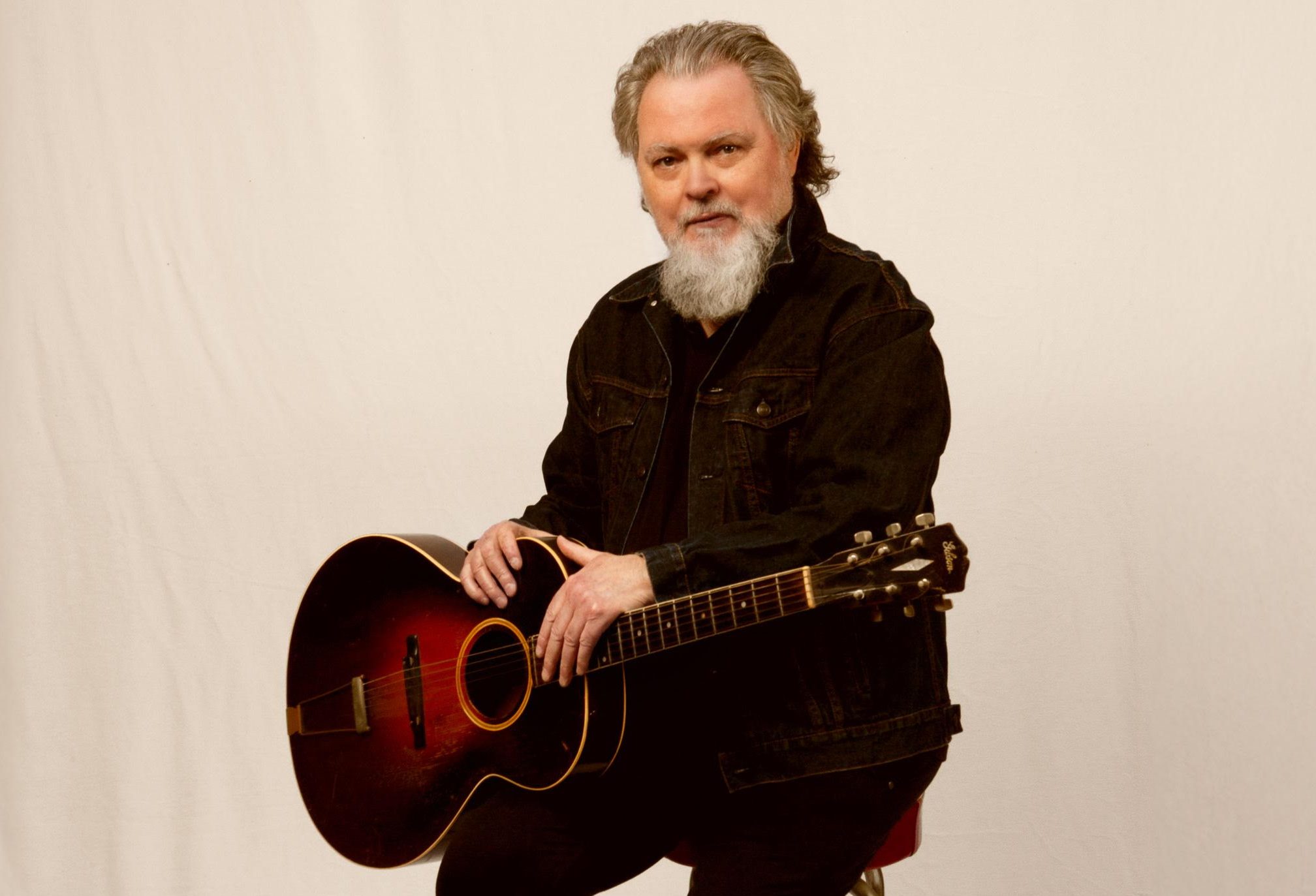
Guitarist and singer/songwriter Jamie James will be releasing new solo album Straight Up on March 14, 2025. James has had a varied musical career, including work with DQ and The Sharks (featuring actor Dennis Quaid), his long-time collaborations with the late Harry Dean Stanton, his role as a touring member of Steppenwolf in the late ’70s, and as singer and founding member of the LA-based Rockabilly trio The Kingbees.
On Straight Up, James reunites with his DQ and The Sharks bandmates, including Tom Walsh (drums), Ken Stange (organ), and Tom Mancillas (bass), and he performs on guitar and harmonica.
Today, we’re very pleased to premier the first single from Straight Up, titled “Let The Praying Begin”, here on Wildfire Music + News. The single will be officially released this Friday, February 14th, 2025, via Oglio Records, and there’s a certain thematic connection, too, with this relationship song landing on Valentine’s Day.
Though at first glance, you might take the title of the song for the opening of a Gospel track, there’s a long tradition of love songs that explore the complexities of religious feelings and the ways in which our reactions to romantic love may connect with faith, hope, and belief in the powers of life itself. James’ song is far from a traditional love song, since it comes from a place of reckoning with a complicated past, one in which, presumably, love has not played much of a consistent part. Now, a newer realization dawns that the speaker has glimpsed a love that’s so profound that no matter what happens, or what forces may try to drive them apart, they must continue along that road. And that means even going into the darker places in our minds and hearts if necessary. Hence the double (and maybe more) meanings behind the phrase “Let the praying begin.” It could indicate that the speaker is going up against some intense forces and needs all the help they can get via prayer, or it could mean that they need help in pursuing love in a true and dedicated way. Either way, it comes down to a sense that true love isn’t all about rainbows and sunshine. It’s about encountering something that we recognize as bigger and more powerful than ourselves.
The music on this song unhurried, contemplative, but emotive track is not overly polished, providing an intentional vibe of directness, and while James is obviously a fan of Rock and Rockabilly, this track may even carry a hint of the Blues. Certainly Blues vocal tradition is built on observing inequalities and difficulties that pit man against the bigger, more overwhelming universe, and James’ vocals for this song place him in the same position in relationship to love itself. There’s also a seriousness and drama to the instrumentation that makes “Let The Praying Begin” far more than a introspective love song, and taps into a tradition along the lines of Johnny Cash, who hints at the intensity of internal struggles by rendering them simply and directly in narrative, storytelling terms. Drama forms the core of the song, and that’s supported by all of its musical aspects as well as its lyrics.
Of the single, James says:
I grew up in rock ‘n’ roll in the ’60s—let’s just say I didn’t always live the life of a choirboy. But after a while, you find someone you actually love, and that feels better than anything. The song is about saying, if this relationship is wrong or a sin, or if this woman is too good for me, I’m not stopping—so go ahead and pray for me. In the end, the power of love makes us better.

Jamie James speaks about the evolution of his career and his current solo work:
“In the winter of 1978, I founded the Kingbees with Michael Rummans on bass and Rex Roberts on drums. The year before, in 1977, I had toured internationally with a new version of Steppenwolf—the first lineup without John Kay – called The New Steppenwolf. This group included original members Nick St. Nicholas and Goldy McJohn, along with guitarist Kent Henry, drummer Tony DeSantis, vocalist Tom Pagan, and myself. We played extensively across the United States and Europe. However, after about a year, I felt uncertain about the project’s future. I shifted my focus, started listening heavily to Buddy Holly, and embraced a simpler sound. I sold my 1960 Les Paul, which supported me financially while I launched the Kingbees, keeping the ‘57 Strat for that rich, twangy tone I wanted.
Our first performance was in early May 1979 at The Troubadour, and our debut album was released on RSO Records in March 1980. We found some success with a regional hit, “My Mistake.” Eventually, both the band and the record label dissolved, and I needed a break.
After a couple of years on pause, I began collaborating with a dear friend, Harry Dean Stanton. We made music together for about nine years, and he introduced me to genres I hadn’t explored before, which was both refreshing and inspiring. By the end of the 1990s, that phase was winding down.
In 2000, I started a new project with Dennis Quaid. We formed Dennis Quaid and the Sharks, with Tom Walsh on drums, Tom Mancillas on bass, and Ken Stange on keyboards. This band lasted nearly two decades, up until 2018 or 2019, just before the pandemic hit.
The slowdown brought by the pandemic gave me time to refocus. I started writing songs again and picked up the harmonica with newfound dedication. Over the next couple of years, I wrote consistently, and the songs kept coming. From about 30 songs I’ve written, I’m excited to share these 10 with you through Oglio Entertainment.
The musicians on this project are the same talented team I worked with in Dennis Quaid and the Sharks: Tom Walsh on drums, Ken Stange on organ, and Tom Mancillas on bass, with me on guitar and harmonica. I couldn’t be more thrilled to present these songs to you.”
