
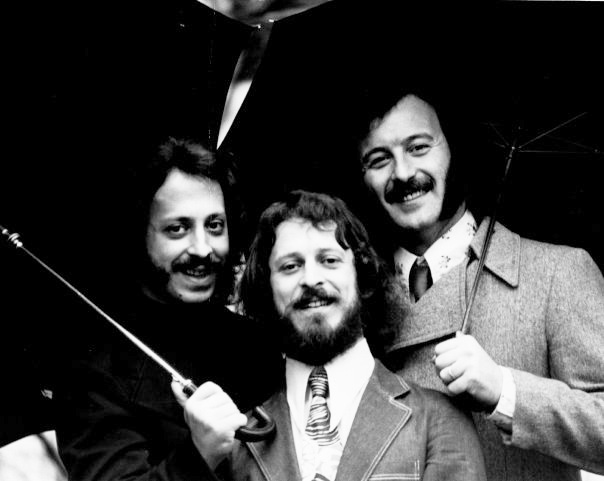
Craft Recordings and Jazz Dispensary have announced the vinyl reissue of Goldenwings, the 1976 fusion album from Uruguayan trio Opa. Masterminded by the Fattoruso Brothers, Airto Moreira, and Hermeto Pascoal, Goldenwings, delivers a blend of Latin rhythms, synths, and vocal harmonies. It includes songs such as “African Bird,” “Corre Niña,” “Tombo,” and the title track.
Returning to vinyl for the first time in 50 years, Goldenwings arrives on October 18th, 2023 and marks the latest title in Jazz Dispensary’s Top Shelf series. As with all releases in the series, the LP features all-analog mastering by Kevin Gray at Cohearent Audio and is pressed on 180-gram vinyl at RTI. A tip-on jacket, replicating the album’s original design, completes the package.
The story of Opa begins in the Uruguayan capital of Montevideo, where brothers Hugo and Jorge Osvaldo Fattoruso forged their musical roots. In 1963, the Fattorusos formed their first band, Los Shakers (alongside Roberto “Pelín” Capobianco and Carlos “Caio” Vila). Influenced heavily, in both look and sound, by the Beatles, the four-piece enjoyed a successful career in South America, releasing multiple hit albums and helping to establish the region’s Psychedelic Rock scene. When the group disbanded in 1969, however, Hugo and Jorge were eager to expand their repertoire and formed Opa alongside bassist Ringo Thielmann.
Despite their Garage Rock roots, the Fattoruso brothers took a different direction with Opa, blending Latin Jazz, Funk, Pop, and Rock for their own flavor of fusion. As the new decade dawned, the trio relocated to New York City, where they caught the ears of Brazilian Jazz drummer, Airto Moreira.
Moreira recruited them for several studio projects, hiring them as his live band, and helping the group sign to the Jazz label Milestone Records.
In 1976, the band worked on their US debut, with Moreira serving as Producer. Joining the trio were guitarist David Amaro (Antônio Carlos Jobim, Herbie Hancock, Wayne Shorter) and the Brazilian Hermeto Pascoal (flute, percussion), while Moreira made several cameos as a percussionist.

Opa only released two albums before disbanding in the early ’80s. Hugo Fattoruso moved to Brazil, where he worked with the likes of Djavan and Chico Buarque, and Jorge returned to Uruguay, where he formed a group alongside his wife, singer Mariana Ingold.
While neither of Opa’s albums found commercial success during their initial releases, both titles gained underground followings over the following decades.
