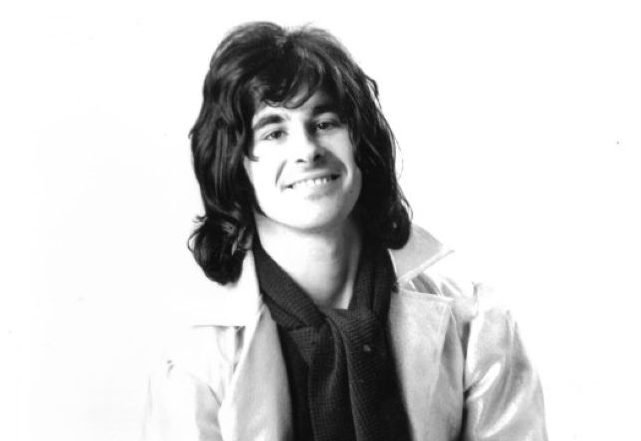
[Cover photo credit to Estate of Thomas Evans]
Tom Evans is best known as the bassist for England’s Badfinger, the Apple Records group who first reached the U.S. Top 40 in March of 1970 with “Come and Get It,” written by Paul McCartney and sung by Evans. Prior to the group being named Badfinger, Evans was a member of The Iveys, and “Maybe Tomorrow,” written and sung by Evans, charted in the U.S. Top 100 in February of 1969 on Apple. Evans was part of the classic Badfinger lineup including Pete Ham, Joey Molland, and Mike Gibbins. Evans and Ham co-wrote “Without You” which Harry Nilsson took to the No. 1 spot in 1972 and reached No. 3 in 1994 for Mariah Carey.
Y&T Music, who have released several of The Iveys, Badfinger, and Badfinger members’ related CDs in recent years, have just released I Believe in You, the second album of rare home demos by Evans with the full support of the Estate of Thomas Evans. It is the first time that these historic recordings from the ‘70s have been released to the public and showcase the influence of Badfinger on Evans’ songwriting. The CD package includes a 12-page booklet with rare photos provided by Evans’ widow, Marianne. The recordings were restored and mastered by Kevin McElligott with compiling, editing, remixing, and additional engineering by Tom Brennan. Y&T Music founder Rich Ulloa spoke with Wildfire about this latest Badfinger related release.

Available on CD and digital formats from Y&T Music
Warren Kurtz: Congratulations on this year’s demos release from The Iveys, Miniskirts and Rainbows, the Pete Ham tribute CD, Just Look Inside the Cover, and now the second Tom Evans demos CD I Believe in You.
Rich Ulloa: Thank you and big thanks for all the coverage you have given our Badfinger projects in recent years. I got connected in recent years with the estates of the Badfinger members to make all of these Y&T Music releases happen.
My love of Badfinger began 55 years ago. I was at a friend’s house at the end of 1971, and he had their Straight Up album, that had just been released. “Day After Day” was the current single on the radio. He played me what would become the next single, “Baby Blue,” and that was it. I loved it! He played it for me again and the next day I bought the album at Aquarius Records in Miami. I fell in love with the album and went back and bought the prior album No Dice with “No Matter What” on it. When the next Apple album, Ass, came out with “Apple of My Eye” on it, I bought it too. It was Pete Ham’s songs that drew me into the band’s music. Pete is my all-time favorite musician, which is why I did two tribute albums to him.
WK: “Baby Blue” is my wife Donna’s Badfinger favorite.
RU: In addition to that being my favorite song on Straight Up, it is also my all-time favorite song. On No Dice, my favorite song is the finale, “We’re for the Dark.” I have enjoyed working on these Badfinger related releases with Tom Brennan, who is the Badfinger historian and archivist. He knows everything about each song. Kevin McElligott does all the mastering and restoration and is amazing. Mark Strothmann is the point person who works with all of the estates.
WK: We’ve highlighted a few Pete Ham compositions. Now let’s move on to Tom Evans. Last night I went back and listened to his ‘60s demos that you captured on I Am Myself in 2024. These ‘70s demos on I Believe in You are so much better, fully developed, and definitely show the maturing of his songwriting and Badfinger’s influence.
RU: The first release was an earlier period for Tom, in The Iveys or pre-Iveys era where he didn’t have access to the best technology. On this new release you can see he had become such a great songwriter, with better techniques, and better recording equipment. I agree with you.
WK: Two versions of “I Believe in You” are included. “I Believe in You (version 2)” is the opening number, which I prefer with the harmonies, and the CD ends with version 1.
RU: What I was told from Tom Brennan and Mark Strothmann was that they wanted to start the album with the more up-tempo version and end the collection with the heartfelt slower version. “I Believe in You” should have been a hit for his mid-70s band The Dodgers. He was writing with Bob Jackson, who you spoke with about Badfinger’s Head First album. Four or five of these songs could have easily been on the ‘70s album by The Dodgers with both Tom and Bob in that band.
WK: After Tom’s time with The Dodgers ended, he was back with Joey Molland for a new Badfinger lineup. In 1979, they released the album Airwaves, which I reviewed. I wrote that I liked side one more than side two, which isn’t surprising because, at that time, the people at record companies caught on that record stores would play album sides, so the first side would be more hit weighted, with the Saturday Night Fever album soundtrack being a prime example of that with Bee Gees’ and Yvonne Elliman’s hits on that opening side. I wrote about Tom’s “Look Out California” and Joey’s “Love is Going to Come at Last” but I didn’t write about Tom’s “Lost Inside Your Love,” the beautiful song between those other tracks, which I certainly enjoy now, and sounds good as a demo too.
RU: I feel the same way. After Pete passed away in 1975, the heart and soul of Badfinger was gone and I lost interest in the band even though I loved them so much, so I didn’t buy Airwaves when it came out. A few years later when I bought the album, I thought Joey’s “Love is Going to Come at Last” could have been as good as any song on the prior Badfinger albums.
WK: When I interviewed Joey, I told him how much I enjoy that song, and he was so thrilled to hear that.
RU: I like Airwaves a bit more than their final album from 1981 Say No More, which is a good album too. Let me share some news. I have learned that Say No More will be reissued next year on Iconoclassic Records with several bonus tracks, almost the equivalent of a double album, remastered from the original tapes.
WK: That will be great to hear. You mentioned Bob Jackson earlier. That gets us to “Twenty-Four Reasons” intended to be for The Dodgers, with Bob joining on acoustic guitar and harmony vocals.
RU: I like the harmonies on this song, which sounds like a song The Beatles could have included on their Rubber Soul album. Like Pete, Tom had a great sense of melody.
WK: I am only learning about The Dodgers now, although I do recall seeing the 1978 album but by that time, Tom was no longer in the group so there wasn’t any Badfinger related promotion of it.
RU: I have only really learned of The Dodgers in the past couple of years while working with Bob Jackson and the estates. I unfortunately heard that Tom was told to leave the band. It is a shame that they only did a couple of singles when he was in the band, yet they were writing all these songs. Tom’s up-tempo “Try to See Eye to Eye” is another song that I think could have been a hit for The Dodgers, when I listen to the demo. It’s just classic songwriting.
WK: When I think about Badfinger’s “Without You,” co-written by Tom and Pete or “I Don’t Mind” that Tom wrote with Joey, on some of Tom’s compositions, as good as they are, perhaps he just needed a co-writer to elevate the songs.
RU: That’s so true. Pete was the driving force who wrote the hits, but Badfinger would not have had the success they did without Tom, Joey, or Mike, four very talented artists. They were a classic band with the short life but created a great body of work. I think their music will live forever and maybe Badfinger will get into the Rock & Roll Hall of Fame. Look for more Badfinger related projects on Y&T Music in the new year. I am very grateful for all of your support. You have been a real champion for all of our music. I can’t thank you enough.

Available on 2-LP and CD formats from Renaissance Records
In addition to this new release from Y&T Music, Renaissance Records has released the Badfinger album Live at the Cambridge Performance Center, Cambridge, Massachusetts March 31, 1974. Imagine a Harvard or MIT student sneaking in a cassette recorder under a winter coat to the short-lived venue and taping thirteen songs from Badfinger with their classic lineup. That bootleg sound quality may be just for the most ardent of Badfinger fans, but it historically showcases a dozen of the band’s original compositions. Of the hits, Ham’s “Baby Blue” sounds best, capturing its exciting intensity. Evans and Molland’s tender “I Don’t Mind,” from No Dice, comes through the most clearly of the songs. The finale is the quartet’s version of Dave Mason’s 1970 single “Only You Know and I Know,” which Delaney & Bonnie took to No. 20 the following year. This cover fits the band perfectly. If you can overlook the bootleg sound quality, then you’ll be privy to immersing yourself in one of the last shows of the classic Badfinger lineup’s final U.S. tour in the ‘70s.
We thank the Badfinger family estates and dedicate this article to the four classic Badfinger lineup members who have all passed: Pete Ham (1975), Tom Evans (1983), Mike Gibbins (2005), and Joey Molland (2025).
Warren Kurtz, a long-time music journalist and author, can be contacted at fabulousflipsides@yahoo.com