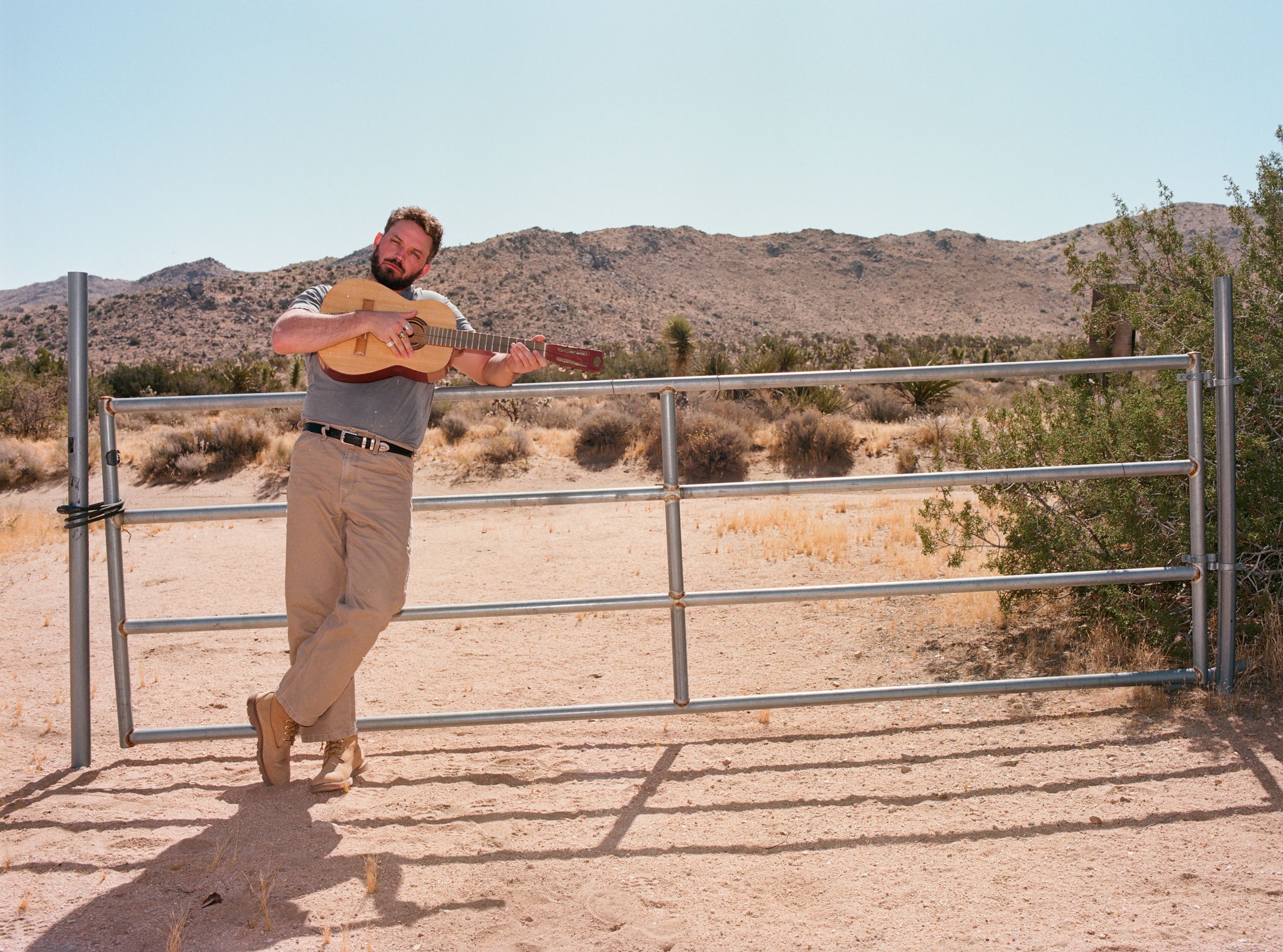
[Cover photo credit to Helder Matias]
Canadian singer-songwriter Sam Drysdale moved to Los Angeles at the age of seventeen to attend the Musicians Institute. He later relocated to Nashville and won the It’s Your Shot songwriting contest in 2014. Drysdale moved back to Ontario and released the eight-song EP Bonnie’s Sad Songs in 2024, opening with his composition “Only the Strong Survive,” with close to seven million plays on Spotify.
Now Drysdale is back with his first full length album, Purgatory Cove, named for a real place on Lake Huron in Ontario. The thirteen-song collection explores loneliness that follows a broken relationship and the peace found in nature. The album was co-produced with John Felner, a Juno nominated producer and songwriter. Wildfire spoke with Drysdale about a half dozen songs from his new album.

Sam Drysdale’s Purgatory Cove is available on vinyl LP and digital formats
Warren Kurtz: Congratulations on Purgatory Cove. Let’s begin with “The Astronaut.” I live in Central Florida. Last month, my wife Donna and I watched a rocket launch from our driveway with a crew of two U.S. astronauts, one Canadian astronaut, and one Russian cosmonaut. It was great seeing many neighbors coming out to watch this event with members of different countries coming together in the sky. In your song, you reach out from the sky in the opening line, “Ground control, it’s me again,” reminding me of David Bowie’s lyrical perspective.
Sam Drysdale: “The Astronaut” was the first song on the project before I even knew I would be creating a full album. We wanted to keep music releases going after my last EP in 2024, Bonnie’s Sad Songs. I think “The Astronaut” is the heart of the album, probably my favorite song. It is about taking longer in life to find your soulmate than you would hope. It is sung from the perspective of an astronaut who decides to leave earth because of his frustration in not finding a loving relationship. He decides to go out looking among the stars. I sing in the chorus, “Baby, are you out there somewhere? I’ve been on my own for so long. If you’ve got a light or something, could you just turn it on?” The astronaut is looking for a signal for a place to go as he is feeling so lonely on earth. I wrote the song after a date that I thought went really well but apparently, she didn’t feel the same way. When I play this song in my shows, the whole band steps away, and I just play it with my acoustic guitar. The audience seems to embrace that intimacy.
WK: Your emotional vocals on “The Cage” remind me of engaging deliveries heard in the ‘90s from Darius Rucker and Rob Thomas. You convincingly sing, “I haven’t felt like myself in so long.”
SD: I was feeling tremendous sadness, and I learned that I was not alone when a fellow songwriter, who was grieving the loss of a child, connected deeply with the song. I hope it helps other people know that they aren’t alone and feel understood.
WK: My favorite production happens on “Rusty Night” with John Fellner’s cello and the string sounds, plus Saveria D’Ippolito’s background vocals on the bridge.
SD: John was the executive producer of the album, one of the best in Canada right now. He is a multi-instrumentalist and a very good songwriter. He was my chief collaborator on the album. We complete each other on what we bring to the table. Saveria is a friend of John’s who is tremendously talented with a great tone. I heard her sing some interludes on another project of John’s. I asked her if she would be willing to be involved with this album and she was kind enough to oblige.
WK: The “Rusty Night” song title caught my eye because of a song by the British duo Peter and Gordon that I enjoyed growing up called “Knight in Rusty Armour,” one from the mid-1960s that most people don’t remember.
SD: I was trying to find a song where this imagery had been used versus a knight in shining armor. It’s nice to learn from you that there is another song out there with that concept.
WK: The song “Boys” brought back some memories. After we graduated high school, my group of boys went on an out of state camping trip. Then during a summer college break we did it again in state. There is imagery and life lesson pondering on this song that you co-wrote with Joey Verskotzi.
SD: “Boys” was one of the trickier songs to write lyrically for the album. Joey wasn’t one of the camping trip boys, but he is certainly one of my boys. He produced my Bonnie’s Sad Songs EP and a good chunk of the record I made before that when I was performing in a more pop and R&B style. He is very talented and based in Los Angeles. I like to go to him for weird, off the wall ideas. He is more ethereal in his songwriting approach and production, unafraid to try different sounds and different instrument combinations that most people would not consider.
WK: I always enjoy hearing the use of violin in songs and John does a nice job of that on “Cold Water,” which rolls along nicely at the beginning, and then there is a dramatic tempo change. Congratulations on the radio airplay this song has achieved in Canada. I grew up in Cleveland, Ohio, where I could listen to Canadian radio and hear songs like this that I wouldn’t hear on U.S. stations.
SD: “Cold Water” received pop radio airplay throughout Canada, which was my first song to have that level of radio exposure. The tempo change allows me to do a stomp clap beat at shows. Up-tempo songs are lot more difficult to write than slower ballads. This is the first time where I wrote something up-tempo that sounded believable to me.
WK: The album ends with the title song “Purgatory Cove.” I like your Bruce Springsteen reference in your lyrics because when I listen to this album, I am reminded of a combination of the simplistic drive of Bruce Springsteen’s “I’m on Fire,” the quiet storytelling of Shawn Mullins’ “Lullaby,” and the fun bounce of Mumford & Sons’ “I Will Wait,” all from different decades.
SD: The album melds two worlds, one being heartbreak and loneliness at home and the other being a camping trip that I go on each year where I have a big reality check out in the wilderness with no cell phone service for five days, bringing it back to basics with people who I trust around me. “Purgatory Cove” is a narrative about a guy going on a canoe trip by himself to seek isolation and enlightenment after a bad heartbreak. The first three minutes of the song is a reference to the first canoe trip that my friends and I went on ten years ago, and we have been doing it annually ever since. We experienced a severe storm, pulled our canoes out of the water, and sat under a tarp listening to the music of Bruce Springsteen in a three-foot circle with six 200-pound guys, shivering, and trying to stay warm. I have a lot of fond memories of Bruce Springsteen including driving through the state of Nebraska with my father, listening to Springsteen’s Nebraska album and I have since taken my dad to a Bruce Springsteen concert. Thank you so much for your coverage of my music.
Warren Kurtz, a long-time music journalist and author, can be contacted at fabulousflipsides@yahoo.com